
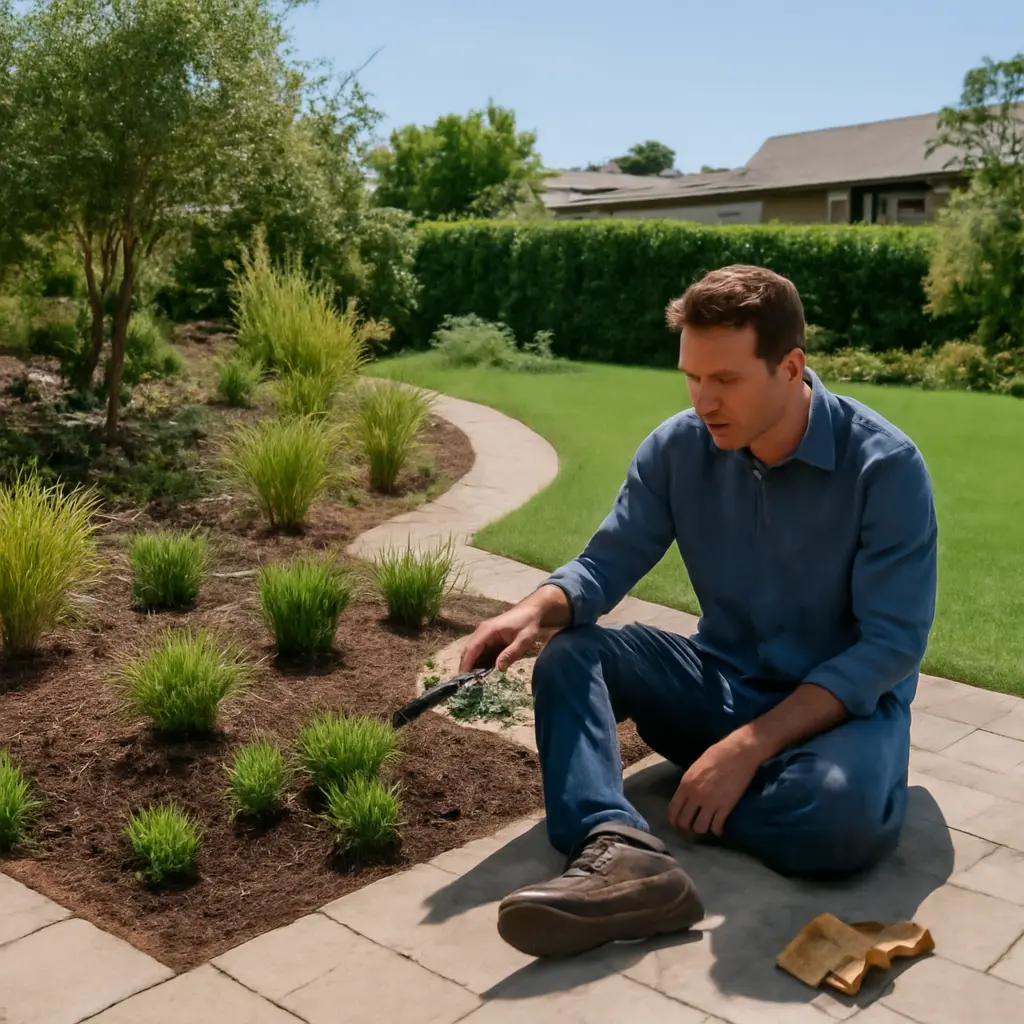
Skipping routine yard work can mean more time for family, hobbies, rest, and other priorities—but it does not have to mean giving up a cared-for outdoor space. The key is to reduce, simplify, or delegate the work that matters least to you. That trade-off is practical: the U.S. Bureau of Labor Statistics reports that Americans age 15 and older spent an average of 0.15 hour per day on lawn and garden care in 2023, roughly nine minutes across the full population and more among people who did the activity. By choosing lower-maintenance landscaping, using efficient tools, or hiring help selectively, homeowners can reclaim hours while keeping their yards safe and attractive.
Time-saving yard care and the value of reclaimed time
Time-saving yard care means maintaining an outdoor space with less personal labor by changing the landscape, reducing unnecessary tasks, or paying someone else to handle selected jobs. It is not a single service or a promise of a maintenance-free yard; it is a set of choices matched to a household’s budget, climate, property, and priorities.
The Bureau of Labor Statistics’ American Time Use Survey separates lawn and garden care from other household activities, making clear that yard work competes with a broad range of ways people spend their time. The survey’s 0.15-hour daily average for people age 15 and older includes people who did no lawn or garden care that day, so it should not be interpreted as the time commitment of an active gardener. For an individual homeowner, weekly mowing, seasonal cleanup, watering, and repairs can add up to substantially more.
The broader benefit is opportunity: time saved can go toward exercise, social connection, creative pursuits, or simply recovery. The American Time Use Survey tracks how people allocate their days, but it does not establish that outsourcing yard work automatically improves well-being. The value depends on what a person wants to do with the hours and whether the cost of saving them is worthwhile.
The true cost of do-it-yourself maintenance
Do-it-yourself yard care costs more than the minutes spent holding a mower. It may also involve equipment purchases, fuel or electricity, repairs, storage, protective gear, and the effort of scheduling tasks around weather. Listing these costs alongside time helps homeowners compare doing the work themselves with hiring a service or changing the yard’s design.
A simple estimate can make the trade-off concrete: record the hours spent on recurring tasks for several weeks, then multiply that time by the value you place on an hour. Compare the result with the price of a service or a one-time landscape change. This is a personal decision tool, not a standardized economic measure, but it can reveal which tasks are worth keeping and which are candidates for reduction.
Low-maintenance landscaping and less yard work
Low-maintenance landscaping is the planned use of plants, ground covers, and outdoor features to reduce recurring work such as mowing, watering, edging, and weeding. The University of Florida Institute of Food and Agricultural Sciences describes Florida-Friendly Landscaping as an approach that can conserve water and reduce maintenance when plants are matched to local conditions. The exact plant choices and practices vary by region; a design suited to one climate may not work in another.
A lower-maintenance yard is not necessarily a bare or neglected yard. It can include a smaller lawn, locally adapted plants, mulched beds, clearly defined paths, and outdoor areas designed for how residents actually use the property. The most successful changes usually start by identifying which parts of the yard provide real value and which create recurring chores without serving a purpose.
Right-size the lawn
Right-sizing means keeping lawn where it supports a specific use—such as play, recreation, or a clear walkway—and replacing excess turf with suitable alternatives. Less lawn generally means less area to mow and edge, though replacement beds still need establishment and occasional care. Before removing turf, check local rules, drainage needs, fire-safety guidance, and any homeowners’ association requirements.
A practical example is a homeowner who rarely uses a large side lawn but regularly maintains it. Converting part of that space to a mulched planting bed or a paved sitting area can reduce repetitive mowing while making the property more useful. The right solution depends on sun exposure, soil, water availability, and the intended use of the area.
Choose plants suited to local conditions
Plants adapted to local climate and soil are more likely to thrive without intensive watering, fertilizing, or replacement. Cooperative extension services and public gardens can help identify suitable species and planting practices. “Native” does not automatically mean zero-maintenance: new plantings need care while they become established, and even well-adapted landscapes benefit from periodic pruning and monitoring.
Grouping plants with similar light and water needs can also simplify irrigation. Mulch can help suppress weeds and moderate soil moisture, but it should be applied appropriately and kept away from tree trunks and building foundations. These measures reduce avoidable upkeep rather than eliminating all outdoor work.
Use ground covers and durable outdoor features
Ground covers, paths, patios, and seating areas can replace difficult-to-maintain strips of grass. A durable path, for example, may reduce repeated trimming along a frequently used route, while a correctly designed patio can make outdoor leisure easier to enjoy. Materials and layout should account for runoff, accessibility, local regulations, and the heat or maintenance characteristics of the chosen surface.
These landscape changes connect directly to the next strategy: when a yard still needs regular attention, better tools and a consistent schedule can make the remaining work faster and safer.
Efficient tools and routines that save hours
Efficient yard care uses suitable equipment and repeatable routines to reduce time, effort, and avoidable rework. The goal is not to buy the most powerful tool, but to match the tool to the job and maintain it so work is completed safely and effectively.
Match equipment to the task
Choosing equipment based on yard size, terrain, storage, and physical ability can prevent wasted effort. A mower that is difficult to maneuver on a small, steep lot may create more burden than it removes. Before purchasing powered equipment, compare the full costs of ownership, including maintenance and storage, and review the manufacturer’s safety instructions.
The U.S. Consumer Product Safety Commission has documented serious hazards associated with lawn and garden equipment, including injuries involving lawn mowers. Safe operation, appropriate footwear and eye protection, keeping children away from operating equipment, and shutting equipment off before clearing debris are essential parts of an efficient routine—not optional extras.
Batch tasks and plan around seasons
Batching means doing similar tasks in one planned session rather than repeatedly setting up equipment and returning to the same area. A homeowner might combine edging with mowing or schedule pruning and debris removal during the season when those jobs are appropriate. Local extension guidance is useful because mowing height, pruning timing, and watering needs differ by plant and region.
A short checklist can prevent small problems from becoming time-consuming repairs: inspect irrigation for leaks, clear walkways, remove hazardous fallen branches, and check equipment before use. The checklist should be tailored to the property, since unnecessary tasks can add work rather than save it.
Automate selectively
Automation includes tools such as programmable irrigation controllers and robotic mowers. These can reduce routine involvement when they suit the landscape, but they require setup, maintenance, and occasional troubleshooting. Irrigation controls should be adjusted for local weather and plant needs; running a fixed schedule without checking conditions can waste water rather than save it.
For many households, the best approach is selective automation: automate a repetitive task only when the expected time savings justify the equipment cost and upkeep. That same cost-benefit thinking also helps determine whether to delegate work to a professional.
Professional yard services and selective outsourcing
Professional yard services are paid services that handle some or all outdoor maintenance, from recurring mowing to occasional pruning, cleanup, or landscape installation. Outsourcing can reclaim personal time, but its value depends on service quality, scope, cost, and the homeowner’s preferences. It is often possible to delegate only the jobs that are physically demanding, technically complex, or especially time-consuming.
Compare recurring and one-time services
Recurring services are useful for predictable tasks such as mowing, while one-time or seasonal services may cover leaf removal, hedge work, or a landscape redesign. A written estimate should clarify what is included, how often the work occurs, who supplies materials, and how changes or weather delays are handled. Comparing quotes on the same scope makes the cost comparison more meaningful.
A homeowner who enjoys gardening but dislikes mowing might hire a mowing service while retaining planting and pruning. Another might schedule a one-time redesign to reduce future upkeep. These examples show why outsourcing does not have to be all-or-nothing: the homeowner can keep the parts of yard care that feel rewarding and hand off the rest.
Check qualifications, safety, and local rules
Before hiring, ask about insurance, worker training, references, equipment practices, and the handling of yard waste or chemicals. Requirements for pesticide application, business licensing, and water use vary by jurisdiction, so confirm local rules rather than relying on a general assumption. A clear agreement helps prevent misunderstandings about property access, payment, and the services provided.
Professional help can be especially valuable when a task involves heavy equipment, significant tree work, steep slopes, or physical limitations. For hazardous work, use appropriately qualified professionals rather than treating a potential safety risk as a routine time-saving project.
A practical plan for reclaiming your free time
A practical time-saving plan starts with measurement, then makes targeted changes. Instead of trying to overhaul an entire property at once, homeowners can identify the most repetitive tasks and test the lowest-cost solutions first.
- Track yard-care tasks and time for two to four weeks, noting seasonal or weather-related differences.
- Separate essential jobs—such as keeping paths safe and managing drainage—from optional or purely cosmetic work.
- Choose one recurring task to reduce through a design change, more efficient routine, suitable tool, or paid service.
- Estimate the costs, including purchases, repairs, service fees, and any ongoing maintenance.
- Review the result after a month or a season: confirm that time was saved and that the yard still works for the household.
This method treats time as a real household resource without assuming that every minute outdoors is wasted. Gardening can itself be a valued hobby, and some people prefer doing their own work for exercise, enjoyment, or control over the result. The aim is to spend less time on chores that do not serve those preferences.
Conclusion: Make the yard work for your life
Skipping or reducing yard work can create more room for the activities people value, but the best solution is personal. Low-maintenance landscaping can reduce recurring chores; efficient tools and routines can make necessary tasks simpler; and selective professional help can transfer time-consuming or risky work. The Bureau of Labor Statistics’ time-use data offers a useful national reference, while each household’s own task log provides a more relevant estimate of its potential savings.
Start by tracking where your yard-care hours go, then make one manageable change and use the reclaimed time intentionally. For plant choices and region-specific maintenance advice, consult a local cooperative extension service or public gardening resource. A well-planned yard should support the life you want to live—not consume more of it than you choose.
Sources: U.S. Bureau of Labor Statistics, American Time Use Survey—2023 Results, https://www.bls.gov/news.release/archives/atus_06272024.htm; University of Florida Institute of Food and Agricultural Sciences Extension, Florida-Friendly Landscaping Program, https://ffl.ifas.ufl.edu/; U.S. Consumer Product Safety Commission, Lawn Mower Safety, https://www.cpsc.gov/Safety-Education/Safety-Guides/Outdoor/Lawn-Mower-Safety.