
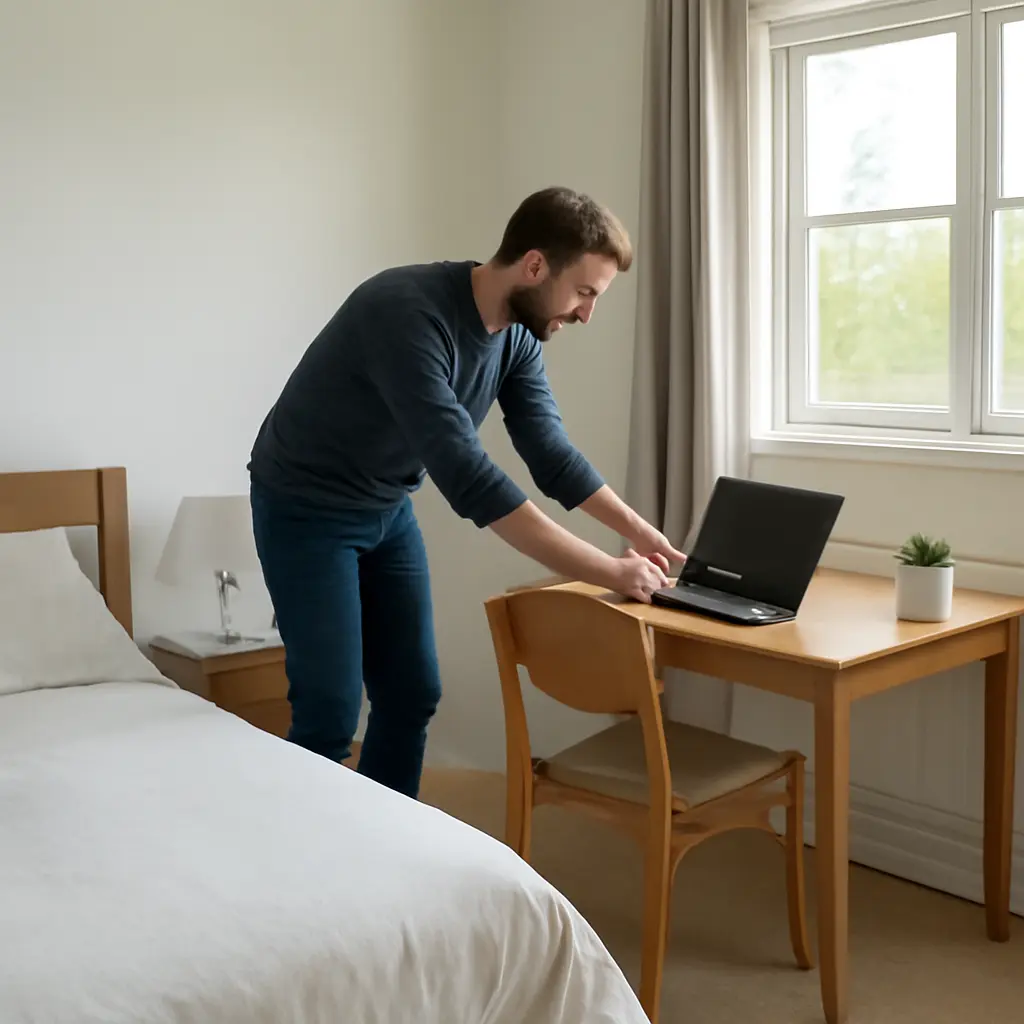
A second bedroom can be more than spare space for remote workers: it can support a dedicated home office, reduce the friction of working from home, and potentially help a home appeal to future buyers. Its value is not automatic, however. The practical and financial benefit depends on the room’s size, privacy, location, local housing market, and how easily it can return to use as a bedroom. Research from the U.S. Census Bureau and workplace organizations shows that working from home remains a significant feature of U.S. employment, making flexible rooms relevant to both everyday life and housing decisions.
A second bedroom gains value as a flexible home office
A second bedroom is a room in a home designed or legally recognized for sleeping, while a home office is a space used for work-related tasks. When one room serves both purposes, its value is best understood in three ways: the usefulness it provides to the resident, the cost of creating a workable office, and its potential contribution to a property’s market appeal. These are different kinds of value; a comfortable office does not necessarily translate into an equal increase in the home’s sale price.
The shift toward remote and hybrid work gives this flexibility practical importance. The U.S. Census Bureau reported that 13.8% of employed people usually worked from home in 2023, up from 5.7% in 2019. That national figure does not describe every worker or local market, but it helps explain why buyers and homeowners may pay closer attention to rooms that can support work as well as sleep.
Daily-use value: privacy, focus, and separation
Daily-use value is the benefit a room delivers while someone lives in the home. A separate office can make it easier to take calls, concentrate, and put work away at the end of the day. A 2023 Gallup survey found that many remote-capable U.S. employees worked in hybrid arrangements, reinforcing the need for spaces that can handle both concentrated work and changing household routines. The room’s benefit is greatest when it offers a door, enough space for a desk and chair, reliable internet, and a location away from household traffic.
Market value: useful feature, not guaranteed premium
Market value refers to what a buyer may be willing to pay for a property under local conditions. A second bedroom can make a home more adaptable, but there is no universal price premium for labeling it an office. Buyers may value the room as a nursery, guest room, or bedroom just as much as a work area. The National Association of Realtors’ buyer and seller research regularly tracks home features and buyer priorities, but the effect of any individual room depends on comparable sales, property size, layout, and local demand. For a realistic estimate, compare similar homes in the same neighborhood rather than relying on a national rule of thumb.
Replacement value: compare office setup with other options
Replacement value is the cost of obtaining a comparable work setting elsewhere, such as a coworking membership or a daily commute to an office. It can be useful to add up what a dedicated room saves in travel, memberships, or occasional workspace rental, then compare that figure with the cost of furnishing and maintaining the room. This calculation is personal: a worker who goes to an employer’s office several days a week may use the room less than someone who works from home full time. Treat potential savings as a household estimate, not a guaranteed financial return.
A second-bedroom office works best when its design remains flexible
Once the room’s value is understood, its design determines how much of that value it can deliver. A well-planned office should support work without making the room difficult to use as a bedroom. This is especially important for homeowners who may sell, rent, or need the space for family later.
Room layout and ergonomics
Ergonomics means arranging equipment and furniture to support comfortable, efficient work. A desk should fit without blocking the door, closet, window, or normal walking path. The U.S. Occupational Safety and Health Administration recommends arranging computer workstations to reduce awkward posture and glare, including positioning a monitor at a comfortable viewing height and keeping frequently used items within easy reach. A supportive chair, task lighting, and a stable work surface often matter more than expensive decorative upgrades.
Light, noise, and connectivity
A room’s workability depends on more than its floor area. Natural light can make daytime work more pleasant, while curtains or blinds help control glare on screens. A door, rug, bookcase, or weather stripping may reduce some household noise, though these measures do not provide full soundproofing. The Federal Communications Commission’s broadband mapping resources can help residents check reported internet availability at an address; actual performance should also be tested inside the home, especially if video calls or large file transfers are routine.
Reversible furnishings and dual-purpose use
A dual-purpose room can function as an office on weekdays and a guest room or bedroom when needed. Reversible choices—such as a compact desk, movable storage, a sleeper sofa, or a wall-mounted work surface—make that transition easier. Keeping a clear sleeping area and avoiding permanent alterations can preserve the room’s flexibility. If the property is marketed for sale, describing it as a bedroom with office potential may communicate more options than presenting it only as a specialized workspace.
A second bedroom’s financial return depends on costs and local rules
A useful room can improve quality of life without being a profitable renovation. Before spending, distinguish routine furniture purchases from construction, and check whether the changes affect taxes, insurance, rental arrangements, or a home-office deduction. Rules vary by location and personal circumstances, so general guidance should not substitute for advice from a qualified tax or real-estate professional.
Budgeting and realistic return expectations
Start with a simple budget for the desk, chair, lighting, storage, and any improvements to electrical or internet access. Then compare the total with the likely years of use and the alternatives it replaces. Remodeling Cost vs. Value reports from Zonda show that renovation returns vary by project and market; their estimates are not a promise that a particular office conversion will increase a specific home’s sale price. In many homes, retaining a recognizable bedroom while adding removable office furniture is a lower-risk strategy than permanently converting the room.
Tax treatment and employer arrangements
In the United States, employees generally cannot claim the federal home-office deduction for unreimbursed employee expenses under current IRS rules. Self-employed taxpayers may qualify if they meet requirements such as regular and exclusive business use, subject to the details of their situation. The Internal Revenue Service explains that a home office may qualify when it is used exclusively and regularly for business and meets an applicable principal-place-of-business or other test. Workers should check current IRS guidance and ask a tax professional before claiming expenses; simply working remotely does not automatically make a room deductible.
A practical example: keep the bedroom option intact
Consider a remote worker who needs a quiet place for meetings but occasionally hosts visiting family. A compact desk near a power outlet, an adjustable chair, closed storage for work equipment, and a convertible guest bed may satisfy both needs without structural changes. This approach does not guarantee a higher resale price, but it can improve everyday usability while preserving the room’s appeal to buyers who need a conventional second bedroom.
Conclusion: treat the second bedroom as an adaptable asset
For remote workers, a second bedroom can be valuable as a private workspace, a flexible household room, and a feature that may matter to future buyers. Its strongest benefits are often practical rather than guaranteed financial gains. National work-from-home data explain why adaptable rooms are relevant, while local comparable sales—not assumptions about a universal office premium—offer a better guide to resale value.
Before investing, assess your work schedule, privacy needs, room dimensions, internet reliability, and the cost of a functional setup. Favor changes that improve comfort while keeping the room easy to return to bedroom use. For tax or renovation decisions, consult current official guidance and qualified local professionals.
Sources: U.S. Census Bureau, “The Number of People Primarily Working From Home Tripled Between 2019 and 2021,” https://www.census.gov/newsroom/press-releases/2022/people-working-from-home.html; Gallup, “The Future of the Office Has Arrived: It’s Hybrid,” https://www.gallup.com/ workplace/511994/future-office-arrived-hybrid.aspx; National Association of Realtors, Research and Statistics, https://www.nar.realtor/research-and-statistics; U.S. Occupational Safety and Health Administration, Computer Workstations eTool, https://www.osha.gov/etools/computer-workstations; Federal Communications Commission, National Broadband Map, https://broadbandmap.fcc.gov/; Zonda, Cost vs. Value, https://www.costvsvalue.com/; Internal Revenue Service, Publication 587, Business Use of Your Home, https://www.irs.gov/publications/p587.